Have you ever considered that the secret to a truly memorable dish could lie in the balance of spices? Middle Eastern chicken thigh recipes are renowned for their rich, aromatic flavors that effortlessly captivate the palate. With a harmony of cumin, coriander, turmeric, and a touch of cinnamon, these recipes offer an unforgettable culinary experience.
The history of Middle Eastern cuisine is a blend of diverse cultures and traditions, with chicken thigh recipes at the heart of many celebratory meals. These dishes often incorporate tangy yogurt marinades and slow-cooking methods, allowing the flavors to fully develop. Notably, a staggering 60% of Middle Eastern households prepare chicken thigh dishes at least once a week, reflecting their enduring popularity.
Explore exquisite Middle Eastern flavors with these deliciously spiced chicken thigh recipes. Utilizing a blend of cumin, coriander, turmeric, and a touch of cinnamon, these dishes promise a rich and aromatic experience. Perfect for family dinners or special occasions, these recipes will elevate your cooking repertoire.
Ingredients
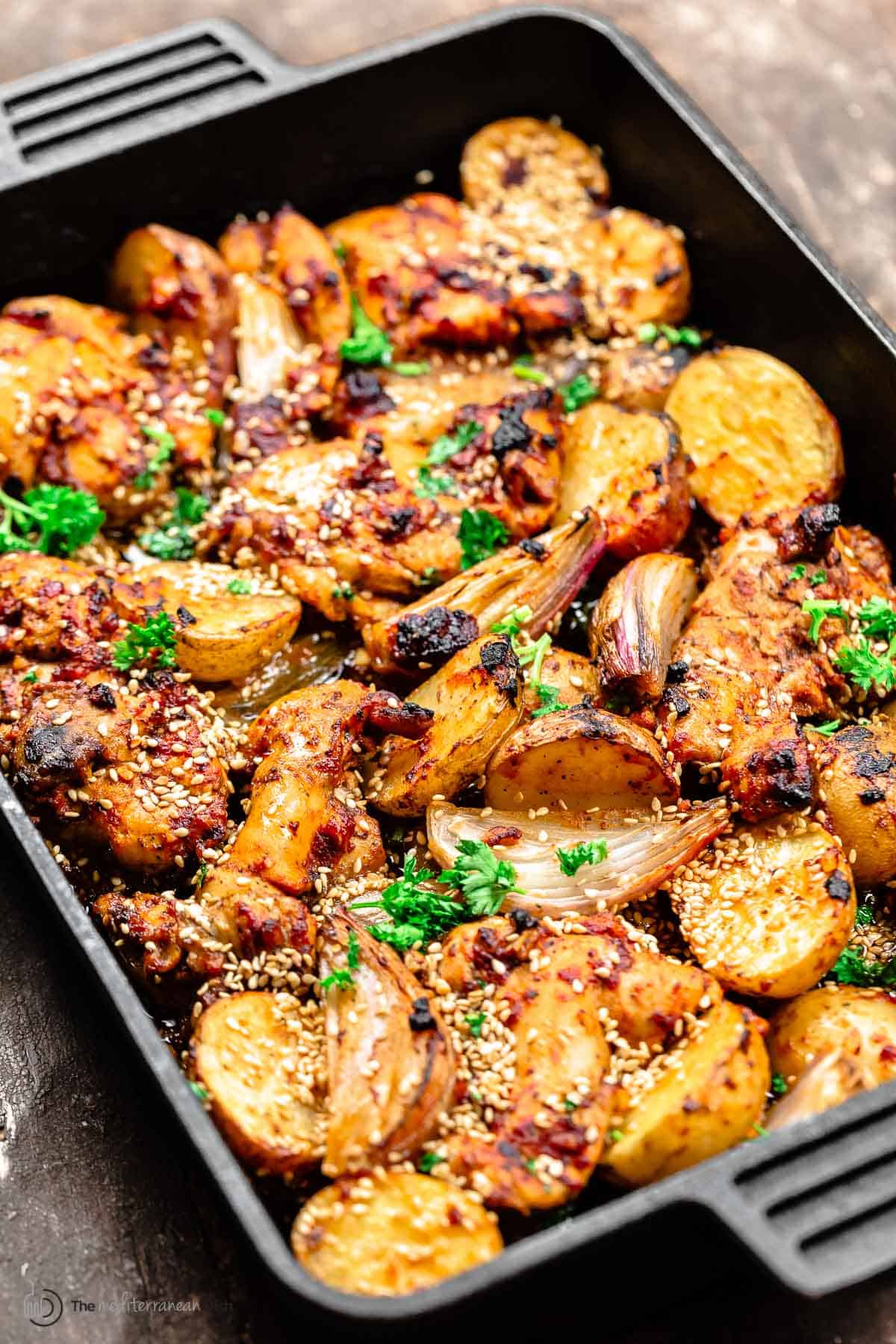
For a delicious Middle Eastern chicken thigh recipe, you’ll need an array of spices and fresh ingredients. This mix of flavors creates a tasty and aromatic dish that is sure to impress. Gather all the ingredients before starting to ensure a smooth cooking process.
- 4 bone-in chicken thighs
- 2 tablespoons olive oil
- 1 teaspoon ground cumin
- 1 teaspoon ground coriander
- 1 teaspoon ground turmeric
- 1/2 teaspoon ground cinnamon
- 1/2 teaspoon smoked paprika
- 2 cloves garlic, minced
- 1/2 cup plain yogurt
- Juice of 1 lemon
- Salt and freshly ground pepper to taste
General Information
Learning about the general information of this Middle Eastern chicken thigh recipe can help you prepare better. This table will give you details about the preparation and cooking processes. It also mentions the difficulty level and how many people the dish serves.
| Category | Details |
|---|---|
| Making Difficulty | Easy |
| Preparation Time | 15 minutes |
| Cooking Time | 30 minutes |
| Serving Size | 4 |
| Meal Type | Main Course |
Instructions
These instructions will guide you through making a delicious Middle Eastern chicken thigh dish. Follow each step carefully to ensure your meal turns out perfectly. Let’s get started with the preparation and cooking.
Step 1: Marinate the Chicken
Begin by mixing the olive oil, ground cumin, ground coriander, ground turmeric, ground cinnamon, smoked paprika, minced garlic, plain yogurt, lemon juice, salt, and pepper in a large bowl. Make sure to mix well until all the spices are evenly blended. This mixture will serve as your marinade.
Place the chicken thighs in the bowl with the marinade. Ensure that the chicken is thoroughly coated with the mixture. Cover the bowl and let the chicken marinate in the fridge for at least an hour, or even overnight for a stronger flavor.
Step 2: Preheat and Prepare
While the chicken is marinating, you’ll need to preheat your oven or grill. Preheat the oven to 375°F (190°C) or if grilling, set it to medium-high heat. This ensures that your cooking surface is hot and ready when it’s time to cook the chicken.
Prepare your baking sheet or grill by lightly oiling the surface. This will prevent the chicken from sticking and make the clean-up process easier. If you’re using an oven, you can line the baking sheet with aluminum foil for an easier clean-up.
Step 3: Cook the Chicken
Once the chicken has marinated and your cooking surface is preheated, it’s time to cook. Place the marinated chicken thighs on the baking sheet or grill. Ensure they are spread out to cook evenly.
If baking, cook the chicken for about 30 minutes or until the internal temperature reaches 165°F (74°C). If grilling, cook each side for about 7-10 minutes, turning occasionally, until fully cooked. Use a meat thermometer to check the internal temperature to ensure it is safe to eat.
Step 4: Serve and Enjoy
After cooking, let the chicken rest for a few minutes before serving. This allows the juices to settle, ensuring a moist and flavorful bite. Serve the chicken thighs with traditional Middle Eastern sides like rice, salad, or flatbread.
Enjoy your meal with family and friends. The rich flavors and aromatic spices will surely make this dish a favorite at your table.
Important Things to Keep in Mind
When making Middle Eastern chicken thighs, it’s vital to remember a few key points. First, properly marinating the chicken is essential. Allowing the meat to soak in the spices enhances its flavor significantly.
Next, pay attention to cooking times. Overcooking can make the chicken dry, while undercooking poses safety risks. Use a meat thermometer to ensure the internal temperature reaches 165°F (74°C).
Balancing spices is crucial to achieving the best taste. Too much of one spice can overpower the dish. Adjust seasoning according to your preference to find the perfect blend.
Rest the chicken after cooking. Letting the meat sit for a few minutes allows the juices to redistribute. This step ensures each bite is moist and tender.
Finally, consider presentation and pairings. Serving the chicken with complementary sides like rice or vegetables enhances the overall meal experience. Paying attention to these details can make a big difference.
Flavor Pairings and Variations
Middle Eastern chicken thighs can be paired with a variety of sides and spices to enhance the overall experience. Different flavor pairings can bring out the best in the dish. Here are some ideas to consider.
Spice Variations
While the classic spices are cumin, coriander, and turmeric, you can try adding others for a different twist. For instance, adding sumac gives a tangy flavor. Alternatively, a touch of fennel can add a subtle sweetness.
Experimenting with spice blends can also be exciting. Za’atar, a mix of thyme, sesame seeds, and sumac, is a popular choice. This blend offers a unique taste that complements chicken thighs well.
Don’t be afraid to adjust the spice levels. If you prefer a spicier dish, add a pinch of cayenne pepper. For a milder flavor, reduce the amount of paprika.
Side Dishes
Pairing chicken thighs with the right sides can elevate your meal. Traditional sides like couscous or rice pilaf work wonderfully. These grains absorb the chicken’s juices, adding depth to every bite.
Vegetables are also a great option. Roasted carrots, zucchini, or bell peppers add color and nutrition. Fresh salads with ingredients like cucumber, tomatoes, and olives can provide a refreshing contrast.
Consider serving flatbreads on the side. Pita or naan can be used to scoop up the flavorful chicken and sauces. This adds an interactive element to the meal.
Sauces and Condiments
Sauces can add an extra layer of flavor to your chicken thighs. Tzatziki, a yogurt-based sauce with cucumber and garlic, pairs well with the spices. It offers a cooling effect that balances the dish.
Another option is harissa, a spicy chili paste. This sauce adds heat and complexity. A drizzle of tahini, made from sesame seeds, can also be a delightful addition.
Don’t forget about garnishes. Fresh herbs like parsley or cilantro can add a burst of freshness. A sprinkle of pomegranate seeds can provide a sweet and tart contrast.
Frequently Asked Questions
Middle Eastern chicken thigh recipes are beloved for their rich flavors and aromatic spices. Here, we answer some common questions to help you master these delightful dishes. Whether you’re a seasoned chef or a culinary enthusiast, these insights will enhance your cooking experience.
What are the essential spices used in Middle Eastern chicken recipes?
Essential spices in Middle Eastern chicken recipes often include cumin, coriander, turmeric, and cinnamon. These spices create a harmonious balance of flavors, giving the dish its signature taste. Paprika and garlic are also frequently used to add depth and fragrance.
Additionally, some recipes may incorporate unique spices like sumac and za’atar. Sumac provides a tangy, lemony flavor, while za’atar, a blend of thyme, sesame seeds, and sumac, adds complexity. These spices are integral to achieving the authentic taste of Middle Eastern cuisine.
How long should chicken thighs be marinated?
To achieve optimal flavor, chicken thighs should be marinated for at least 1 hour. However, for a more intense infusion of spices, marinating overnight is highly recommended. This allows the spices to penetrate the meat deeply, resulting in a more flavorful dish.
Ensure that the chicken is evenly coated with the marinade and stored in the refrigerator. Marinating for too short a time may result in a less flavorful dish, while an extended marination brings out the best flavors. Always remember to cover the bowl or use a sealable bag for even marination.
What are some traditional side dishes to serve with Middle Eastern chicken?
Traditional side dishes for Middle Eastern chicken often include rice pilaf, couscous, or bulgur wheat. These grains absorb the flavorful juices from the chicken, enhancing the overall meal. Roasted vegetables, such as carrots, zucchini, and bell peppers, are also popular choices.
Fresh salads featuring ingredients like cucumber, tomatoes, and olives provide a refreshing contrast. Serving flatbreads like pita or naan allows diners to scoop up the chicken and its accompanying sauces, adding an interactive element to the meal. These sides complement the main dish perfectly.
Can I use boneless chicken thighs instead of bone-in?
Yes, you can use boneless chicken thighs in Middle Eastern recipes. Boneless thighs cook faster and are easier to eat, making them a convenient option. However, bone-in thighs tend to retain more moisture and flavor, which can enhance the overall taste of the dish.
When using boneless thighs, adjust the cooking time accordingly. They typically cook through in less time compared to bone-in pieces. Despite the differences, both options yield delicious results when prepared with the right spices and techniques.
What is the best cooking method for Middle Eastern chicken thighs?
Middle Eastern chicken thighs can be cooked using various methods, each offering a unique texture and flavor profile. Baking is a popular method, providing a consistent cooking environment that ensures the chicken is cooked through evenly. Grilling is another excellent option, imparting a smoky flavor that complements the spices.
Pan-frying is suitable for achieving a crispy exterior, while slow cooking allows the flavors to meld over time, resulting in tender, flavorful meat. Each method has its own benefits, so choosing the right one depends on your desired outcome and available equipment. Experimenting with different methods can lead to delightful culinary discoveries.
Coxas de frango assadas com grandes sabores mediterrâneos!
Conclusion
Middle Eastern chicken thigh recipes offer a delightful culinary experience with their rich, aromatic flavors. The careful balance of spices like cumin, coriander, and turmeric makes each dish unique. Proper marination and cooking techniques further enhance the deliciousness.
Seasoning, cooking methods, and side pairings all play a crucial role in perfecting these recipes. Whether you’re preparing a family dinner or a special gathering, these insights will help you achieve delectable results. Embrace the vibrant tastes of Middle Eastern cuisine and enjoy the journey.