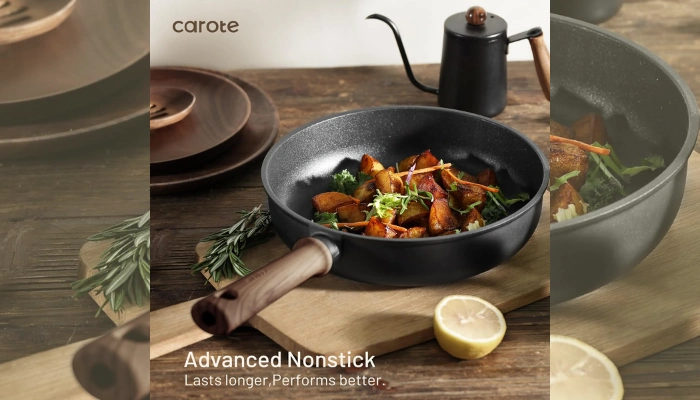
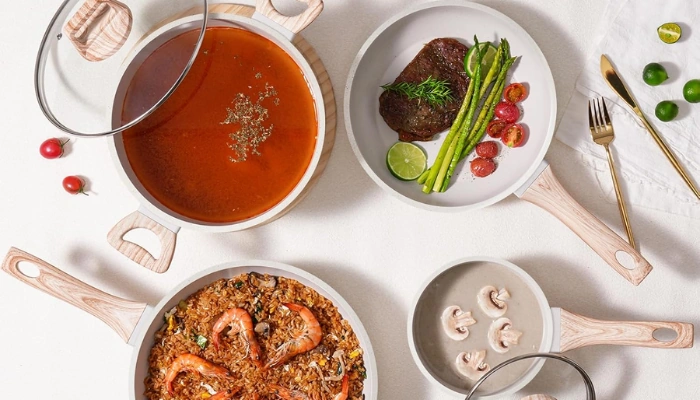
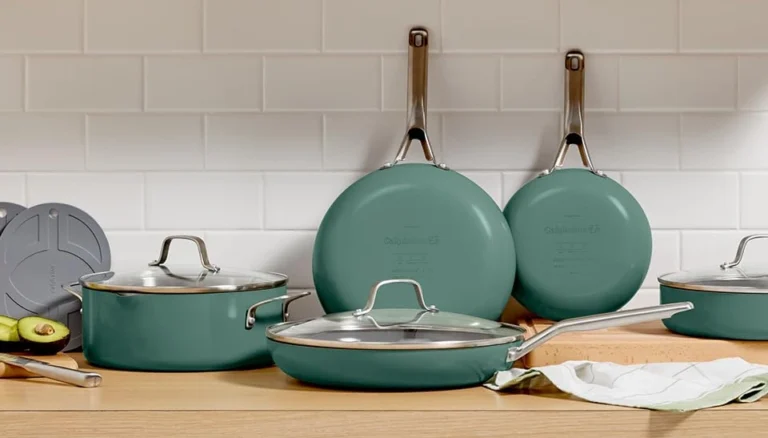
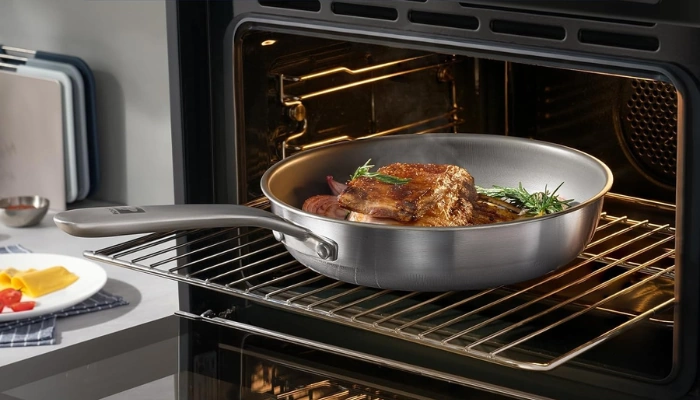
Do Ceramic Pans Have Teflon? No, Ceramic pans do not contain Teflon or PTFE. Their nonstick surface is made from silica-based compounds or natural clay minerals, which are applied using a fired or sol-gel process. Unlike Teflon, which is a synthetic polymer, ceramic coatings provide nonstick performance without PTFE, PFOA, or PFAS, making them a popular non-toxic alternative. However, some products marketed as “ceramic” may contain other coatings or additives, so it is important to verify the brand for truly chemical-free options.
As a result, many of us are turning to ceramic cookware as a safer alternative. Unlike Teflon-coated options, ceramic pans are free from harmful chemicals such as PTFE, PFOA, and PFOS. However, with so many options available in the market, understanding the difference between ceramic and Teflon coatings has become essential for making informed decisions about our cookware.
In this guide, we’ll explore what really goes into ceramic pans, their safety features, and how they compare to traditional Teflon-coated cookware. We’ll help you understand exactly what you’re cooking with and why it matters for your health.

ChefRobot Nonstick Ceramic Cookware Set Healthy Pots And Pans PTFE Free
The ChefRobot 12 piece ceramic cookware set is designed for healthy everyday cooking with a smooth nonstick surface that is free from PFOA, PTFE, lead, and cadmium, allowing you to cook with less oil and easy food release. Compatible with gas, electric, ceramic, and induction stovetops, it heats evenly, cleans easily, and features stay cool ergonomic handles for safe, comfortable use.
Check PriceWhat Are Ceramic Pans Made Of
Ceramic pans are typically made from a metal base, most commonly aluminum, that is coated with a ceramic-based nonstick layer. The ceramic coating is derived from silica-based compounds or natural clay minerals, which are hardened through a firing or sol-gel process to create a smooth cooking surface. This coating gives ceramic pans their nonstick properties without relying on synthetic polymers.
The ceramic layer itself is inorganic and does not contain PTFE or Teflon. Instead, it forms a glass-like surface that helps food release easily and simplifies cleaning. Because aluminum conducts heat efficiently, ceramic pans often provide even heating when used at low to medium temperatures.
Some ceramic pans may also include reinforced layers to improve durability, but quality can vary by brand. While ceramic cookware is widely considered a safer and more natural alternative to traditional nonstick pans, proper care is important to maintain the coating and extend its lifespan.

bazova Store 17-Pieces Pots and Pans Set Removable Handles, guarantees no PTFE, PFAS, PFOA
This 17-piece ceramic nonstick cookware set offers healthy, toxin-free cooking with a PFAS, PFOA, and PTFE free ceramic coating. It delivers smooth nonstick performance using minimal oil.
Removable handles save space and add versatility, making the set ideal for small kitchens, RVs, and everyday use. The cookware is induction compatible, easy to clean, and built for convenient storage.
Check PriceWhat Is Teflon?
Teflon is a brand name for a synthetic nonstick coating made from polytetrafluoroethylene, commonly known as PTFE. It was originally developed for industrial applications due to its resistance to heat, chemicals, and friction. Over time, Teflon became widely used in cookware because of its ability to prevent food from sticking and make cleanup easier.
In cookware, Teflon creates a smooth surface that allows food to release with little or no oil. However, PTFE is a man-made polymer rather than a natural material. When overheated, especially at very high temperatures, PTFE coatings can break down and release fumes that may be harmful. For this reason, proper heat control is essential when using Teflon-coated pans.
Modern Teflon cookware no longer contains PFOA, a chemical once used in manufacturing that raised health concerns. Even so, many people choose alternatives such as ceramic, stainless steel, or cast iron cookware to avoid synthetic coatings altogether.

SENSARTE 14-Piece Ceramic Non Stick Induction Cookware Set, Non Toxic, PTFE, PFAS, PFOA Free
The SENSARTE 14 piece ceramic nonstick cookware set is designed for healthy everyday cooking with a non toxic ceramic coating free from PFAS PFOA PTFE PFOS lead and cadmium. It offers smooth food release with less oil and scratch resistant performance.
This induction compatible set heats evenly thanks to its die cast aluminum body and stainless steel base. Stay cool handles and glass lids add comfort while the cookware remains easy to clean and ideal for daily home use.
Check PriceTeflon vs Ceramic: Key Differences
The Teflon and ceramic coatings differ primarily in their composition, safety profile, and long-term performance. Teflon is made from polytetrafluoroethylene, a synthetic polymer designed to create a highly nonstick surface. Ceramic coatings, by contrast, are derived from silica-based compounds or natural minerals that form a hardened, glass-like layer when fired.
In terms of safety, ceramic cookware is often preferred by those seeking non-toxic options because it is typically free from PTFE, PFOA, and PFAS. Modern Teflon cookware no longer contains PFOA, but it still relies on a synthetic coating that can release fumes if overheated. Ceramic coatings remain stable at normal cooking temperatures but can degrade faster under high heat or improper use.
Performance also varies between the two. Teflon generally offers stronger nonstick performance and tends to last longer when used correctly, while ceramic provides a more natural cooking surface that may require gentler care. Ceramic pans often lose their nonstick qualities sooner, but they appeal to users who prioritize chemical-free cooking over maximum durability.
Summary: Teflon offers longer-lasting nonstick performance, while ceramic prioritizes chemical-free cooking and easier cleanup. Choosing between them depends on your cooking style, safety preferences, and maintenance habits.

SENSARTE Nonstick Ceramic Frying Pan with Lid 8/9.5/10/11/12.5 Inch, Free PFAS/PTFE
This ceramic nonstick frying pan is made with a natural ceramic coating that is free from harmful chemicals, making it a safe and healthy choice for everyday cooking. The smooth surface prevents food from sticking and allows cooking with less oil.
Its cast aluminum body heats evenly on all stovetops including induction, while the stay cool handle and glass lid add comfort and control. The pan is easy to clean and designed for daily use.
Check PriceAre All Ceramic Pans Completely Free from Chemicals
Not all ceramic pans are completely free from chemicals. True ceramic coatings are made from silica-based compounds or natural minerals and do not contain synthetic polymers such as PTFE, PFOA, or PFAS, which makes them a popular non-toxic alternative to traditional nonstick surfaces. However, the term “ceramic” is sometimes used loosely in marketing, and some products labeled as ceramic may include additional coatings or additives to improve durability or performance.
Because of this, it is important to check the product specifications and manufacturer claims before purchasing. Look for cookware that explicitly states it is free from PTFE, PFOA, and PFAS, and comes from a reputable brand with transparent material information. This ensures you are choosing a pan with a genuinely chemical-free ceramic coating rather than one that simply uses “ceramic” in name only for marketing purposes. Proper care and use also help maintain the integrity of the coating over time.

Nuwave Healthy Duralon Blue Ceramic Nonstick Cookware Set, PFAS/PTFE Free
The Nuwave Duralon Blue ceramic cookware set features a natural nonstick coating that is PFAS free and safe for healthy everyday cooking. Its forged construction is lightweight yet durable and allows food to release easily with minimal oil.
Designed for even heating on all stovetops including induction, this cookware set resists scratches and warping while staying easy to handle. It is dishwasher and oven safe, making it practical for daily kitchen use.
Check PriceBenefits of Ceramic Pans
Ceramic pans are widely chosen by home cooks who want a safer and more natural alternative to traditional nonstick cookware. They combine easy food release with a cleaner material profile, making them suitable for everyday cooking when used and cared for properly.
Benefits of Ceramic Cookware:
- Free from PTFE, PFOA, and PFAS
- Non-toxic option for healthier cooking
- A naturally nonstick surface that requires less oil
- Easy to clean with minimal effort
- Even heat distribution when built on an aluminum base
- Does not release harmful fumes at normal cooking temperatures
- Lightweight and easy to handle
- Available in modern and stylish designs
Ceramic Pans: Limitations and Care Tips
Limitations of Ceramic Pans
Ceramic pans have many benefits, but they also have some limitations. The nonstick coating can wear down faster than traditional Teflon when exposed to high heat or abrasive utensils. They perform best on low to medium heat, as excessive temperatures can reduce the lifespan of the coating. Some lower-quality ceramic pans may also be less durable and prone to chipping or cracking over time. Additionally, their nonstick performance may diminish after repeated use.
Care Tips for Ceramic Pans
To extend the life of your ceramic pans, follow these simple care tips. Always use silicone, wooden, or plastic utensils to avoid scratching the surface. Avoid cooking on high heat and preheat the pan gradually for even performance. Wash the pan by hand with warm, soapy water and a soft sponge, and avoid abrasive cleaners or steel wool. Regular maintenance and proper storage will help preserve the coating and keep the pan performing well for years.
FAQs – Do Ceramic Pans Have Teflon
Do ceramic pans contain Teflon?
No, ceramic pans do not contain Teflon (PTFE). Their nonstick surface is made from silica-based compounds or natural minerals that are hardened through a fired or sol-gel process. This creates a smooth, nonstick coating without relying on synthetic polymers. Unlike Teflon, ceramic coatings are considered safer and do not release harmful fumes when used at normal cooking temperatures.
Are ceramic pans non-toxic?
Yes, most high-quality ceramic pans are non-toxic. They are generally free from PTFE, PFOA, and PFAS, which are chemicals often associated with traditional nonstick coatings. Ceramic cookware is a popular choice for cooks who want a safer alternative for everyday cooking while still enjoying easy food release and minimal use of oil.
Can ceramic coatings wear off?
Yes, ceramic coatings can wear down over time, especially with frequent use at high heat, use of metal utensils, or abrasive cleaning. Once the coating starts to degrade, food may stick more easily. Proper care, including using gentle utensils and avoiding overheating, can extend the life of ceramic cookware significantly.
How do ceramic pans compare to Teflon?
Ceramic pans are safer in terms of chemical exposure, as they do not contain synthetic nonstick coatings. Teflon pans typically offer stronger long-term nonstick performance and are more durable under high heat, but they may release fumes if overheated. Ceramic pans require more gentle handling but provide a chemical-free cooking surface that many home cooks prefer for healthier meals.
Are all ceramic pans completely chemical-free?
Not all ceramic pans are entirely free from chemicals. Some lower-quality or off-brand “ceramic” pans may include additional coatings or undisclosed additives to improve durability or nonstick performance. To ensure a truly chemical-free pan, always check for products labeled PTFE-, PFOA-, and PFAS-free and buy from reputable brands.
How should I care for ceramic pans?
To maintain a ceramic pan’s performance, use silicone, wooden, or plastic utensils instead of metal. Cook on low to medium heat and avoid preheating an empty pan at high temperatures. Hand-wash the pan with warm soapy water and a soft sponge, avoiding abrasive cleaners or scouring pads. Proper care ensures even heating, smooth food release, and long-lasting nonstick performance.
Can ceramic pans handle high heat?
Ceramic pans are best used at low to medium heat. Using them at very high temperatures can shorten the lifespan of the coating, cause discoloration, or even lead to chipping. For searing or high-heat cooking, it’s better to use stainless steel, cast iron, or Teflon-coated cookware designed for those conditions.
Conclusion
Ceramic pans do not contain Teflon or PTFE and are generally considered a safe, non-toxic alternative to traditional nonstick cookware. True ceramic coatings rely on silica-based or mineral layers to provide nonstick performance, making them free from harmful chemicals like PFOA and PFAS.
However, the quality and safety of ceramic pans can vary by brand, so always check labels and choose reputable products for long-lasting, safe cooking. With proper care, ceramic pans can provide healthy, convenient, and reliable cooking for everyday meals.